
Structural Models
Models Don't Predict. They Reveal.
Turn complexity into clarity before you commit to a decision.
A structural model makes visible how decisions, work, capacity, constraints, and outcomes connect. It reveals what drives performance, what holds it back, and the tradeoffs behind a proposed change.
What a Model Makes Possible
See the connections reporting misses. Compare alternatives using real operating evidence. Align leadership around a shared picture of the business.
Five Models We Build
- Operating Model Map How the organization is designed to create value.
- Flow & Capacity Model Where work moves, stalls, and consumes capacity.
- Constraint & Drag Model What limits performance and what it may cost.
- Value Creation Model Where value is created, captured, or lost.
- Decision System Model How authority, choices, and tradeoffs shape execution.
The Advantage
Before you restructure, invest, or expand, see the system you're about to change.
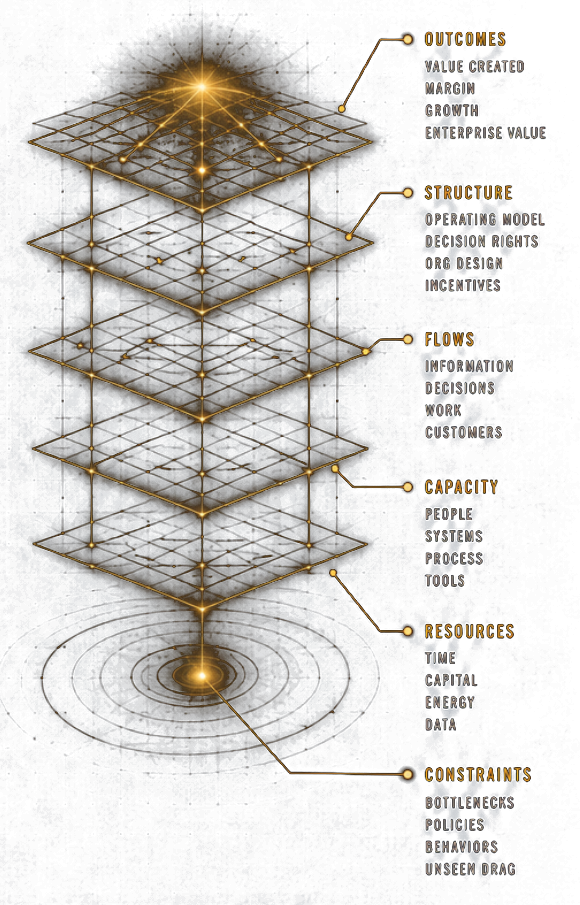
The Value of Structural Models
The decision is rarely the problem. It's everything the decision touches.
A hire, acquisition, system investment, or reorganization changes more than one line in a plan. Model the relationships, constraints, and tradeoffs before those changes become embedded in the business.
Consequences
Know what else changes when you change one thing.
Moving authority, adding technology, or reorganizing functions may relieve one constraint while creating another. A structural model reveals the dependencies that a departmental business case can leave out.
Capital Allocation
Compare the moves before you fund one.
Two alternatives can promise similar returns while placing very different demands on cash, capacity, people, and execution. A model gives competing options a common economic and operational basis for comparison.
Leadership Alignment
Get everyone deciding from the same picture.
Sales, finance, and operations can all have defensible numbers and still disagree about what the company should do. A shared model makes the definitions, dependencies, and competing assumptions visible together.
The Business Case
Don't fund the next version of your company on assumptions you haven't examined.
See the structure. Compare the alternatives. Understand what each decision could change.
Record sales. A client-reported 30% increase in margins.
Hear directly from seven people across the business—executive leadership, sales, accounting, projects, production, creative and field operations. These are the people who experienced the work.
Select a person to watch their moment
Selected Moment
Seven perspectives. One real company.
Explore more real client outcomes, executive experiences and behind-the-scenes footage of the work itself.
Security Signs reported record sales and an increase in margins in its original customer video. Results are client-reported, not independently verified. This is a real historical engagement.



Executive Interventions
Your Competitor May Be Cheaper Because It Does Not Carry the Work You Still Fund.
The price gap may be the cost of a different operating model.
Find what is making your company expensive—in two days or one week.
Compare the Interventions